1. Introduction
Whether a contractor left a renovation unfinished, a landlord refused to return a security deposit, or a client failed to pay for completed work, smaller financial disputes can quickly become difficult to resolve.
Many Bellevue residents and business owners assume that taking legal action will require significant time, high legal costs, or a complicated court process. Because of that, people often decide not to pursue money they may have a legal right to recover.
Washington State’s small claims court was created to make these types of disputes easier to handle. The process is designed for everyday claims, does not require an attorney to file, and usually moves much faster than traditional civil litigation. For many people, understanding how small claims court works makes the process feel far more approachable and practical.
At Hosseini Law Office, we help Bellevue residents understand the small claims process, prepare the right documentation, and avoid procedural mistakes that can delay a case.
Here is a complete step-by-step guide to filing a small claims case in Bellevue courts.
2. What Is Small Claims Court and Is It Right for Your Dispute?
Small claims court is part of Washington State’s District Court system and is designed to help people resolve smaller civil disputes without the cost and formality of traditional litigation.
Cases are typically heard by a District Court judge or court commissioner, and the procedures are generally more straightforward than cases handled in Superior Court. For many Bellevue residents, this makes small claims court a practical option when the amount in dispute does not justify a lengthy legal process.
Small claims court is commonly used for disputes involving unpaid personal loans, security deposit disagreements, property damage, unpaid invoices, contract disputes involving goods or services, and minor vehicle accident claims where responsibility is relatively clear.
At the same time, certain matters cannot be handled in small claims court. Evictions, family law disputes, criminal matters, requests for injunctions, and claims that exceed Washington’s small claims limit must usually be filed in another court.
One of the main advantages of small claims court is that the process is accessible to people without legal training. Even so, speaking with an attorney before filing can help you present the claim clearly, organize supporting evidence properly, and avoid procedural mistakes that may weaken the case.
3. Washington State Small Claims Dollar Limits and Jurisdiction
Washington State places a limit on how much a person can recover through small claims court. Under Washington law, individuals can file claims for up to $10,000 in damages. When a dispute involves an amount above that limit, the case generally must be filed as a civil matter in District Court or Superior Court, where the legal process becomes more formal and legal representation often becomes far more important.
For Bellevue residents, small claims cases are typically filed through the King County District Court (Bellevue Courthouse).
In most situations, a claim should be filed in the county where the defendant lives, operates a business, or where the dispute took place. Because Bellevue is located in King County, disputes connected to the city are generally handled through King County District Court.
Filing fees in Washington small claims cases usually range from about $35 to $80 depending on the amount being claimed. Compared to other types of civil litigation, this makes small claims court one of the more affordable ways to pursue a legal dispute.
Once you confirm that your case qualifies, the next step is learning how to properly file the claim.
4. Step-by-Step: How to File a Small Claims Case in Bellevue
Before filing a small claims case, it is important to try resolving the dispute directly with the other party.
Washington courts generally expect plaintiffs to make a reasonable good-faith effort before turning to litigation. In many situations, sending a formal demand letter by certified mail creates a written record of the dispute and sometimes leads to payment or settlement without the need for a court hearing.
At Hosseini Law Office, we help clients prepare demand letters that clearly explain the claim and communicate the seriousness of potential legal action.
If the dispute is not resolved, the next step is organizing the documents that support the claim. Contracts, invoices, receipts, emails, text messages, repair estimates, photographs, and other written records should be arranged in chronological order so the facts are easy to follow. . .
Once the information is organized, you can complete the Small Claims Summons and Complaint form available through the Washington Courts website or the King County District Court.
The form should include the defendant’s correct legal name, current address, the amount being claimed, and a short explanation of the dispute. After completing the paperwork, the claim can be filed at the King County District Court either in person or by mail along with the filing fee.
The court will then assign a hearing date, which is often scheduled within several weeks of filing.
After filing, the plaintiff must properly serve the defendant with notice of the claim using one of the service methods allowed under Washington law.
5. Properly Serving the Defendant in a Washington Small Claims Case
Properly serving the defendant is one of the most important parts of a Washington small claims case. Even if a plaintiff has strong evidence and a valid claim, the court can dismiss the case if service was not completed correctly.
Because of that, understanding the service rules before the hearing date can prevent delays and unnecessary complications later in the process.
Washington law allows several methods for serving a small claims defendant. In many cases, service can be completed through certified mail with a return receipt, personal service by a process server or Sheriff’s office, or by another adult who is at least 18 years old and not involved in the case.
The defendant generally must be served at least 10 days before the hearing for in-county service and at least 20 days before the hearing for out-of-county service under RCW 12. 40.
After service is completed, proof of service must be filed with the court before the hearing date.
If you are unsure whether service was handled correctly, Hosseini Law Office can help guide you through each procedural requirement for your Bellevue small claims case.
6. How to Prepare for Your Small Claims Hearing in Bellevue
Preparing for a small claims hearing usually starts with organizing the information that supports the case.
Contracts, invoices, emails, text messages, photographs, repair estimates, and witness statements should be placed in a clear chronological order so the facts are easy for the judge to follow. . .
It is also important to bring three copies of all documents so that the judge, the defendant, and you each have a complete set during the hearing.
In addition to organizing documents, it helps to prepare a short explanation of the dispute that focuses on facts, dates, and supporting evidence rather than emotion or frustration. Witnesses can also strengthen a case when their testimony directly relates to the dispute, but they generally must appear in person because written statements alone may carry limited weight.
Some plaintiffs also review Washington statutes or similar cases before the hearing since understanding the legal basis for the claim can improve credibility with the court.
Because the King County District Court handles a large number of cases each day, arriving early can help avoid unnecessary stress before the hearing begins. Allow enough time for parking, courthouse security, and locating the correct courtroom. It is also helpful to anticipate the defendant’s arguments in advance and prepare direct factual responses.
Even in small claims court, professional appearance and preparation can influence how clearly a case is presented.
If you want help organizing evidence and preparing for your hearing, Hosseini Law Office can help you prepare before your court date.
7. What Happens at the Small Claims Hearing
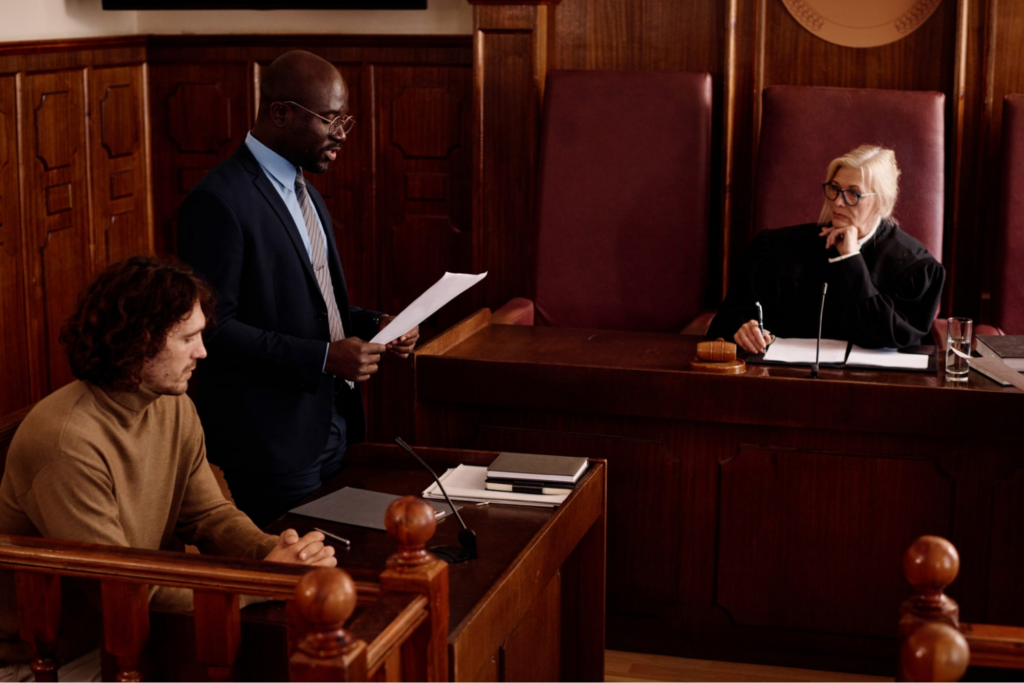
At a small claims hearing, both parties present their side of the dispute directly to the judge or court commissioner.
The process is less formal than traditional civil court, but organization and supporting documentation still play an important role in how clearly the case is presented. Judges often rely on contracts, invoices, photographs, written communication, and timelines to understand what happened and determine whether the claim is supported by the evidence.
During the hearing, the judge may ask questions to both parties about the dispute, the evidence, or the amount being requested.
Clear and factual answers are usually more effective than emotional arguments or unnecessary details. Most small claims hearings last between 15 and 30 minutes depending on the complexity of the case and the court’s schedule that day.
In some cases, the judge issues a decision immediately after both sides finish presenting their arguments. Other times, the court may review the matter further and mail a written decision within several days.
If the plaintiff wins, the court enters a judgment requiring the defendant to pay the awarded amount. When a defendant fails to appear after being properly served, the court will often enter a default judgment in the plaintiff’s favor.
8. Collecting Your Judgment After You Win
Winning a small claims case does not automatically result in payment from the defendant. After the court enters a judgment, the responsibility for collecting the money usually falls on the plaintiff.
Because of that, many successful claimants eventually need to use Washington’s collection procedures to recover the amount awarded by the court. Washington law provides several enforcement options for collecting unpaid judgments.
Depending on the defendant’s financial situation, collection may involve wage garnishment under RCW 6. 27, levying funds from a bank account, or placing a lien against real property owned by the defendant.
If the defendant does not currently have reachable assets, the judgment can still remain valuable because Washington judgments generally remain enforceable for 10 years and may be renewed before expiration.
Interest also continues to accrue on unpaid civil judgments under Washington law, currently at a statutory rate of 12 percent per year under RCW 4. 56. 110. Over time, this can significantly increase the amount owed.
In many situations, working with an attorney can help identify assets, select the appropriate enforcement method, and move the collection process forward more efficiently.
9. When to Consult a Bellevue Attorney Even for Small Claims
Although Washington small claims court does not require plaintiffs to hire an attorney, legal guidance before filing can still make a significant difference in how a case is presented and resolved.
Many claims are weakened by incomplete documentation, unclear legal arguments, or procedural mistakes that could have been avoided with proper preparation.
In some situations, a well-organized claim supported by the right evidence can substantially improve the likelihood of recovering the full amount being requested.
Pre-filing legal guidance is often especially valuable when the defendant is a business with legal experience, the dispute involves unclear contract language, multiple parties are involved, or the defendant may file a counterclaim. While attorneys generally cannot represent clients during the small claims hearing itself in Washington, they are permitted to assist beforehand with strategy, demand letters, evidence organization, and claim preparation.
That type of preparation often helps plaintiffs present their case more clearly and avoid avoidable complications once the hearing begins.
If the amount in dispute approaches or exceeds Washington’s $10,000 small claims limit, an attorney can also help determine whether filing in District Court’s civil division or Superior Court may provide a stronger legal option.
At Hosseini Law Office, we help Bellevue clients evaluate disputes, prepare claims, and understand the most effective path forward before filing.
10. FAQs
How long does a small claims case take to resolve in Bellevue?
Most small claims hearings in Bellevue take place within 30 to 70 days after filing, depending on the court schedule and case details.
Can a business file a small claims case in Washington State?
Yes. Businesses in Washington can use small claims court to recover unpaid balances, property damage costs, or contract-related losses.
What happens if the defendant doesn’t show up to the small claims hearing?
If the defendant was properly served and fails to appear, the court may enter a default judgment in favor of the plaintiff.
Can I appeal a small claims court decision in Washington?
Yes, certain small claims decisions can be appealed depending on the case and amount involved. Appeals move the case into a more formal legal process.
What if the other party files a counterclaim against me in small claims court?
A counterclaim means the defendant is also seeking damages or money from you. The court usually hears both claims during the same hearing.
11. Conclusion
Small claims court gives Bellevue residents and business owners a more practical way to resolve disputes without the time and expense associated with traditional litigatio.
At the same time, successfully pursuing a claim still requires careful preparation, proper filing procedures, organized evidence, and a clear presentation during the hearing. Many avoidable problems in small claims cases happen because important procedural steps were overlooked before the case ever reached the courtroom.
At Hosseini Law Office, we help clients understand each stage of the process, from drafting demand letters and evaluating claims to preparing evidence and addressing post-judgment collection issues.
Whether the dispute involves unpaid invoices, property damage, security deposits, or contract-related claims, early legal guidance can help you approach the process with greater clarity and preparation.
Do not walk away from money you may have the legal right to recover simply because the court process feels unfamiliar.
Contact Hosseini Law Office today to schedule a consultation and get the guidance you need to file and pursue your Bellevue small claims case effectively.