Most small business sales on the Eastside take 60 to 90 days from start to close. It’s October.
If you’re hoping to close by December 31, the calendar is already tight, and the decisions you make in the next few weeks, especially about structure, will shape both your tax bill and your risk. I’m Navid Hosseini, and I help owners through these sales.
Here’s how deal structure affects Washington’s capital gains tax, what protects you as the seller, and what to do before you sign with a broker.
Does the Way You Sell Your Washington Business Change the Capital Gains Tax You Owe?
It can, and often more than owners expect. The same business can be sold in different forms, and each form is treated differently by Washington’s capital gains excise tax. I’m not a CPA, and your CPA has the final word on tax. But you need to understand the legal structure well enough to ask the right questions before anything is signed.
Asset Sale or Stock Sale: What Changes for a Bellevue Seller Under Washington’s Capital Gains Tax?
In an equity sale, where you sell your stock or your membership interest, the gain is generally treated as long-term capital gain allocated to Washington if you live here. Washington’s tax applies to individuals, at 7 percent on taxable gains up to $1 million and 9.9 percent above that, after an annual standard deduction that adjusts for inflation. The Department of Revenue published a $278,000 deduction for 2025.
In an asset sale, the business sells its pieces: inventory, equipment, goodwill and so on. Different pieces are taxed differently. Some, like real estate, are exempt from Washington’s capital gains tax. Others, like inventory, aren’t capital assets at all. That’s why purchase price allocation, the part of the agreement that says how much of the price belongs to which asset, matters so much. Buyers often prefer asset deals, sellers often prefer equity deals, and the negotiation is rarely a tax question alone. It’s also about liability, which is why we look at both.
Why Should Your CPA and Attorney Talk Before You Sign a Letter of Intent?
Because the letter of intent usually sets the structure, and once it’s signed, changing it feels like going back on your word. If the structure drives your tax result, you want your CPA to see it first. If the structure drives who carries risk after closing, you want me to see it.
Washington also has a deduction for the sale of a qualified family-owned small business. It has conditions around things like revenue and ownership, and whether your sale qualifies depends on facts only your CPA and I can review together. It’s the kind of detail that gets missed when an owner signs a broker’s template. I wouldn’t rely on this deduction without confirming it, and I wouldn’t ignore it either. A thirty minute conversation between your CPA and me, before the letter of intent, can save a lot of regret. Our mergers and acquisitions page explains how I coordinate with your tax advisors.
What Protects You as the Seller During a Business Sale in Bellevue?
Selling isn’t just handing over keys. You’re making promises about your business, and those promises can follow you after closing. Two stages carry most of that risk: the early paperwork and the final agreement.
Letter of Intent, Confidentiality and Exclusivity: What Binds You and What Doesn’t?
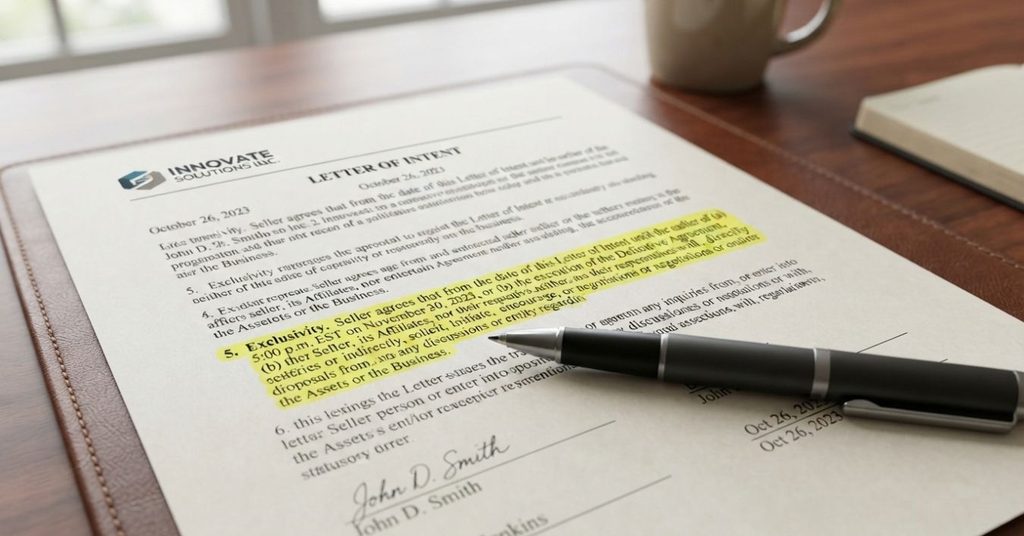
A letter of intent is often described as non-binding, but parts of it usually are binding. Confidentiality commitments, exclusivity periods and expense sharing commonly bind both sides even when the price terms don’t. An exclusivity clause, sometimes called a no-shop, can stop you from talking to other buyers for 30, 60 or 90 days. If the buyer then drags its feet, you’ve lost your leverage and your timeline.
Before signing, check four things. Who is bound by confidentiality, and what happens to the information if the deal dies. How long exclusivity lasts, and whether it ends if the buyer misses a milestone. Whether the price depends on conditions like financing or due diligence results. And whether there’s a fee if either side walks away. I’ve seen sellers shut out of their own market for two months by a clause they barely read.
Representations, Warranties and Indemnity: How Much Risk Stays With You After Closing?
In the purchase agreement, you’ll be asked to state that your financials are accurate, your contracts are in good standing, your taxes are paid, and there are no hidden lawsuits. These are representations and warranties. If one turns out to be false, the buyer can look to you through an indemnity clause.
That’s why details matter. Look at how long the indemnity lasts, how much of the price can be reached, and whether some claims have a small threshold below which the buyer can’t make them. Look at whether any part of the price is held back in escrow. And look at whether your promises are limited to what you actually know. A seller who agrees to broad, unlimited promises on a business with messy records is taking on more risk than the price suggests. Cleaning up your books and contracts before listing, not during due diligence, is the best way to shrink that risk.
Whatever structure you choose, think about what you’ll do after closing. Many sellers are asked to stay on for a transition period, sign a non-compete tied to the sale, or accept part of the price over time through a seller note or earn-out. Each of those is a separate legal commitment with its own risks. A seller note, for example, makes you a lender to the buyer, so you want security and clear default terms. I’d rather you see these terms in the first draft than discover them in the last.
What Should You Do Before You Sign With a Business Broker in Bellevue?

The broker agreement is the first contract of the sale, and it’s usually the one owners read least. It’s also one of the few you can still negotiate without a buyer’s pressure.
Which Listing Agreement Terms Should You Read Closely Before Signing With a Broker?
Read the length of the exclusive period and what happens when it ends. Look for a tail provision, which gives the broker a commission if you sell to someone they introduced after the agreement expires. Check what the commission is calculated on: just the cash at closing, or also on an earn-out, seller note or the value of assets sold separately. Ask who pays marketing costs, and whether you can end the agreement if the broker isn’t performing.
I’d also check what the broker is allowed to share with potential buyers, and when. Your customer lists, your financials and your employee details are sensitive, and a listing agreement shouldn’t leave that vague. None of this means brokers are the enemy. A good one earns the commission. But the contract should say what happens in the situations that don’t go as planned. Our guide on when you really need a business attorney explains why early review is cheaper than a late fix.
When Should You Bring a Business Sale Attorney In, and What Should You Hand Over First?

Before you sign with the broker, and certainly before you sign a letter of intent. At that stage, I can check the broker agreement, flag problems in your records and contracts that a buyer will find, and talk to your CPA about structure. After the letter of intent is signed, I can still help, but you’ve lost some options.
Bring your last three years of financial statements and tax returns, your formation documents and any ownership agreements, your commercial lease, your key customer and vendor contracts, licenses and permits, and a list of employees with roles and any agreements. If you already have an offer, bring it. For smaller Eastside businesses, our business contract review often covers the cleanup work that makes a business easier to sell.
Finally, be honest with yourself about timing. If your records aren’t clean, your lease can’t be assigned, or a key customer contract needs consent, a year-end close may not be realistic. That’s not a failure. It’s better to close in the new year on good terms than rush in December on bad ones.
What Should a Bellevue Owner Do Before Signing With a Broker to Sell a Business This Year?
A year-end close is possible, but only if you start with structure instead of price. How you sell affects your tax result, your risk after closing and your leverage in negotiation. The best time to set that up is before a broker listing or a letter of intent locks you in. Start with a consultation before you sign with a broker. Bring your financials, your lease and any offers you’ve received, and I’ll walk through the legal steps, the questions to ask your CPA and a realistic timeline for your sale. You’ll know where you stand before the clock runs down.
Thinking about selling your Bellevue business? Book a consultation with Hosseini Law Office before you sign with a broker. Call (425) 943-1746, Monday to Friday, 9am to 6pm.