If you hand new hires a non-compete in Washington, the clock is already running on it. Governor Ferguson signed HB 1155 in March 2026, and starting June 30, 2027, every non-compete in the state is void, including the ones your people signed years ago.
I’m Navid Hosseini, and I’ve been walking Bellevue employers through this. Here’s what counts as a non-compete under the new law, what you can still use, and what you have to do before the notice deadline.
What Counts as a Non-Compete Under Washington’s 2027 Ban, and Which Clauses in Your Agreements Are Covered?
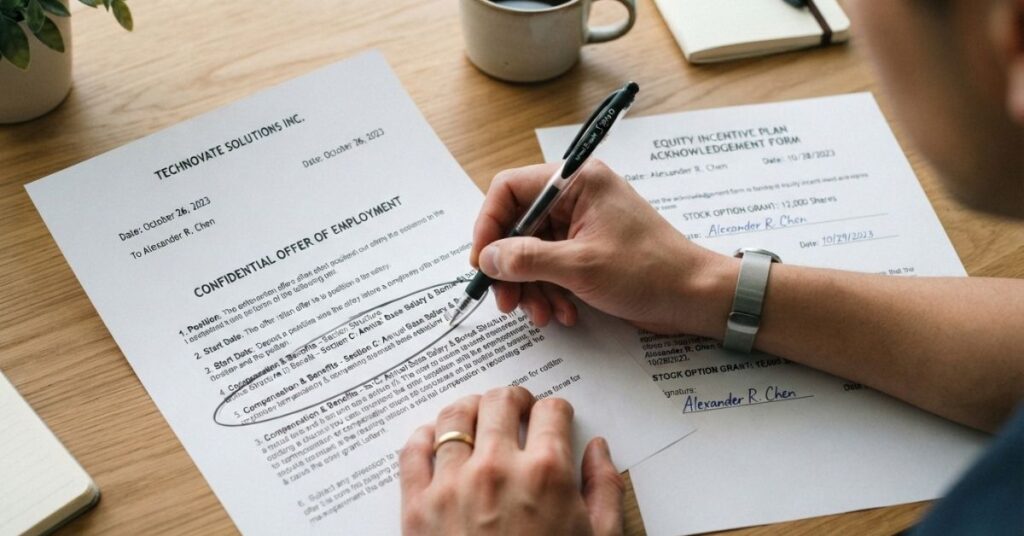
Most owners hear “non-compete” and picture one sentence: you can’t work for a competitor for a year. The new law is wider than that. It reaches clauses you may not think of as non-competes at all, and it reaches them whether the worker signed last week or ten years ago.
So the first job is reading your own paperwork with the new definition in mind.
Why Do Customer Nonservicing and Forfeiture Clauses Now Count as Non-Competes in Washington?
HB 1155 defines a non-compete to include any agreement that directly or indirectly stops a worker from accepting or doing business with a customer. Lawyers call these nonservicing clauses. A departing account manager can’t be barred from taking a client’s business even when the client calls her first. That’s a non-compete in disguise, and it’s now void.
The law also covers forfeiture for competition. If your agreement says a worker has to repay, return or give up pay, equity or another benefit because they went into a lawful trade or business, that’s covered too. I see these in equity plans and commission agreements more often than in the plain employment contract, so check those first. The statute says its protections are read broadly and its exceptions narrowly. A clause that sits close to the line should be treated as covered until someone has read the exact wording.
Do Bonus Repayment and Stay-or-Pay Terms Fall Under the New Law?
This is the question I get most from Eastside employers, especially the ones who pay signing bonuses to land skilled hires. A stay-or-pay term says that if you leave before a set date, you pay part of the bonus back. Whether it survives depends on what triggers the repayment. A repayment on any departure is a different animal from a repayment that kicks in only when the worker joins a competitor or starts a competing business. The second type looks a lot like the forfeiture clauses the law now voids.
The law does carve out one narrow exception for repaying out-of-pocket education costs. The agreement has to expire within 18 months of the start date, the repayment has to shrink pro rata over that period, and the worker can’t owe anything if they leave for good cause. Bonus clawbacks don’t get that carve-out. I wouldn’t rewrite them on a guess. I’d read the actual wording, because a phrase like “to join a competitor” can change the answer.
One more point before you start sorting paperwork. The ban doesn’t wait for you to catch up on your own. It voids covered agreements no matter when they were signed, so an agreement from 2018 is treated the same as one from last month. That’s good news for a worker who has been sitting on a clause they were afraid to challenge. It’s a real adjustment for an owner who built a hiring model around it.
If key people at your company are bound by non-competes today, ask now how you’ll keep their knowledge and relationships protected when the clauses stop working.
What Can a Bellevue Employer Still Use to Protect Client Relationships and Trade Secrets After the Ban?

Losing the non-compete doesn’t leave you defenseless. It means the protection has to come from clauses the law still allows, and those clauses have to be drafted tightly. If you’ve relied on one broad sentence for years, this is where the work is.
How Does a Narrow Nonsolicitation Clause Work in Washington, Including the 18 Month Limit?
A nonsolicitation clause can stop a departing worker from soliciting your current employees to leave. It can also stop them from soliciting your current or prospective customers, patients or clients to move their business away from you. There’s a catch on the customer side. The worker has to have established or substantially developed a direct relationship with that person through the job. A blanket ban covering every name on your client list won’t hold up.
The restriction also has to end no later than 18 months after the worker’s employment ends. And it can only restrict soliciting. The moment it says the worker can’t accept business, it’s a non-compete again. Compared with today’s law, the new language adds prospective customers to the safe harbor, which helps firms with long sales cycles. For a Bellevue consulting or software firm, I’d draft the clause around named account relationships and keep the 18 months visible in the text where nobody can miss it.
Which Confidentiality, Trade Secret and Sale of Business Agreements Stay Valid?
Several categories sit outside the definition entirely. Confidentiality agreements stay valid. So do covenants that stop the use or disclosure of trade secrets or inventions, non-competes tied to the sale of a business, and franchise agreements.
For most Eastside employers, the confidentiality and trade secret agreement becomes the main tool. And plenty of them are thin, a single paragraph buried in an offer letter. I’d rebuild it to say what counts as confidential, how it has to be handled, what happens to files and devices on the way out, and how inventions get assigned. If you’re buying or selling a company, the sale of business exception means a seller’s non-compete in the purchase agreement can still be negotiated. Our mergers and acquisitions work covers that side of the table.
What Does a Washington Employer Have to Do Before the October 1, 2027 Notice Deadline?

The law doesn’t only take things away. It puts a duty on employers, and the duty has a date attached.
Who Must Get the Written Notice, Including Former Employees?
By October 1, 2027, an employer has to make reasonable efforts to give written notice to every current employee and independent contractor whose non-compete is still within its effective period. The notice says the clause is void and unenforceable. It also reaches former workers whose restrictions are still running, and people forget the former workers. Someone who left under a 12 month clause may be clear by then. Someone who left under an 18 month clause may not be.
Start with a list. Pull every form your company has used since your first hire: offer letters, handbook acknowledgments, equity grants, contractor agreements. Match each form to the people who signed it, and that becomes your notice list. The notice itself can be short and plain. I’d still have it reviewed before it goes out, because the wording becomes your record of compliance. Our employment law page explains what we look at, and our guide to how a business attorney helps with employment law compliance shows how this fits into the rest of your hiring paperwork.
What Happens If You Miss the Notice or Keep Enforcing an Old Non-Compete?
The Washington attorney general can investigate and enforce the law, and a worker can bring a private claim. The recovery is the greater of actual damages or $5,000, plus reasonable attorney’s fees and costs. That applies to any violation, including a missed notice. Employers are also barred from entering into a covered non-compete, trying to enforce one, or even representing that a worker is bound by one.
One timing detail matters. A lawsuit filed before June 30, 2027 isn’t governed by the new amendments. And until then, today’s rules still apply. For 2026, an employee has to earn more than $126,858.83 before a non-compete can be enforced, and the disclosure and duration rules still apply too. So don’t read the new law as permission to ignore current paperwork. Read it as a reason to stop adding new non-competes you’ll only have to unwind.
If you’re not sure where your own agreements stand, you’re in good company. Most Eastside owners I meet have never had their hiring paperwork read as a set. They’ve added a clause here, a template there, and an equity plan from a different lawyer. Reading it all together is usually when the problems show up.
What Should a Bellevue Employer Do About Non-Compete Agreements Before June 30, 2027?
Here’s what I’d do this week. Pull the agreement you hand every new hire, and the oldest one still in use. Read them for three things: any non-compete, any clause that bars a worker from accepting a customer’s business, and any repayment term tied to going to a competitor. Then send both to me. I’ll mark which sentences won’t survive June 30, 2027, which ones can become a clean nonsolicitation clause, and what your notice should say. It’s far easier to fix this on paper in October than in a scramble before next fall’s deadline.
Ready to find out which clauses in your agreements won’t hold? Book a consultation with Hosseini Law Office and bring the agreement you give new hires. I’ll review it with you. Call (425) 943-1746, Monday to Friday, 9am to 6pm.